


Frequently Asked Questions
Find answers to common questions about university services, policies, and programs.
About the Heat Safety Protocol
Find answers to frequently asked questions regarding the University's Heat Safety Protocol, including class suspensions, flexible work arrangements, safety measures, and the resumption of regular university operations.

General Frequently Asked Questions
3 Questions1 What triggers the shift to online synchronous learning and flexible work arrangements?
In coordination with the Local Chief Executive (LCE) and under University standing protocols aligned with Executive Order No. 130, the shift automatically takes effect whenever the local Heat Index reaches 42°C and above, based on verified PAGASA weather forecast data monitored by the CLSU Disaster Risk Reduction and Management Council (UDRRMC).
2 How and when will official advisories be announced?
Official advisories are broadcast through the CLSU Official Facebook Page. Following UDRRMC verification, notifications are issued up to two (2) days in advance of the target implementation date whenever possible to allow sufficient preparation time.
3 What happens if weather or ground conditions fall outside the standing 42°C threshold?
Special environmental hazards, severe localized weather disruptions, or unaddressed ground conditions are escalated directly to the Executive Committee (ExeCom) for immediate evaluation and decision-making.
Students FAQs
4 Questions1 Do I need to report to campus for classes when the heat index reaches 42°C or above?
No. In-person classes are automatically suspended. All instruction transitions to Online Synchronous Learning, meaning you do not need to attend face-to-face sessions on campus.
2 What is expected of me during online synchronous learning days?
Students should log in to Google Classroom to attend online lectures, access learning modules and course materials, and complete assignments uploaded by their instructors.
3 What happens to scheduled face-to-face exams, laboratory sessions, and outdoor activities?
All physical laboratory classes, field work, physical education (PE) classes, and campus events are postponed or adjusted to online formats. Instructors will provide rescheduled dates or alternative online submission guidelines once normal operations resume.
4 What if I lose internet connectivity or experience power interruptions at home?
Students facing technical or utility disruptions should inform their instructors as soon as connection is restored. Faculty members are advised to record their live online lectures, provide copies to students, and maintain flexible submission windows for asynchronous deliverables during extreme weather shifts.
Faculty FAQs
3 Questions1 Am I required to report to campus during a 42°C+ heat index alert?
No. Faculty members have the flexibility to fulfill their teaching and administrative duties either on campus or from home, depending on their preference and resource requirements.
2 Should I conduct live synchronous online classes (e.g., Zoom) during these days?
Yes, live synchronous learning is approved. However, to accommodate potential power or connectivity issues during extreme heat, sessions should be kept reasonable to avoid screen fatigue. Teachers are encouraged to record all live sessions and ensure alternative learning options are available so students with connection issues are not penalized.
3 What are my responsibilities regarding student consultation?
Faculty members must maintain open communication channels (email, Google Classroom messaging, or group chats) during designated consultation hours to assist students with coursework queries or technical difficulties.
Administrative and Support Staff FAQs
3 Questions1 Do administrative and support staff automatically work from home at 42°C?
Staff members operate under Alternative Work Arrangements (AWA), which may include work-from-home rotations, staggered hours, or flexible reporting schedules. Specific arrangements must be coordinated with and approved by your respective Unit Head or Office Director.
2 Which offices must maintain on-campus skeleton workforce coverage?
Offices providing essential frontline services—such as Campus Security, University Health Services, Disaster Response, Facilities/Utilities Management, and Executive Offices—will maintain essential physical coverage as designated by their office heads.
3 What safety measures are in place for staff reporting onsite during high heat days?
Onsite personnel are encouraged to take regular hydration breaks, work in well-ventilated or air-conditioned spaces, and strictly avoid strenuous outdoor exposure during peak thermal hours (11:00 AM – 3:00 PM).
Normalization and Resumption FAQs
2 Questions1 How will we know when to return to standard in-person classes and regular work?
In-person classes and regular on-site work will resume only after the Incident and Crisis Management Council (ICMC) confirms that heat index levels have safely dropped below 42°C. Following this verification, the Executive Committee (ExeCom) will authorize a formal Resumption Advisory specifying the exact date and time for physical return, which will be posted immediately on the official CLSU Facebook page.
2 Where can parents and external stakeholders verify official university announcements?
To avoid misinformation, parents and public stakeholders should rely exclusively on announcements published on the CLSU Official Facebook Page.
No matching questions found
Try using different keywords.
About Project SULONG
Learn more about Project SULONG (Sustainable University Loop towards Nature-friendly and Green Transportation), the University's electronic bus transportation service. Find information about its routes, operating schedules, passenger guidelines, payment system, and safety policies.
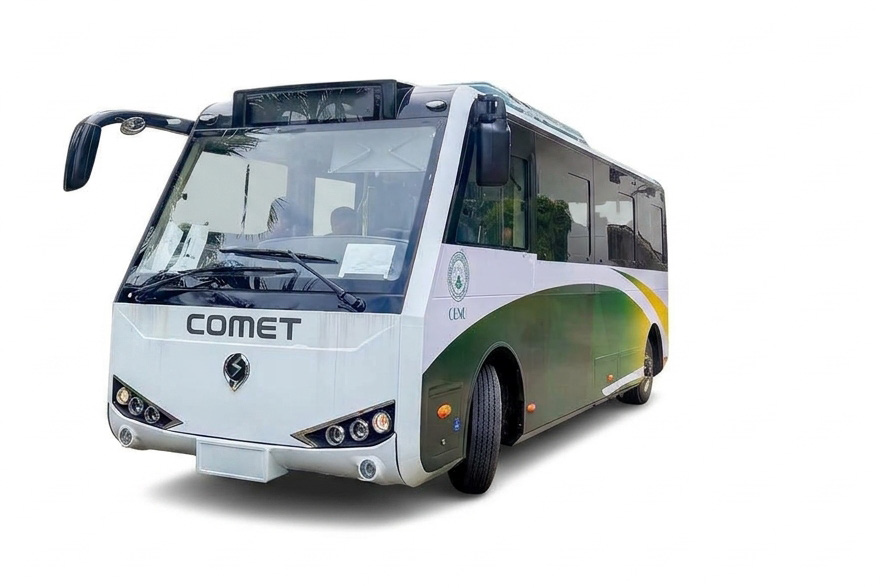
About the CLSU E-bus
4 Questions1 What is the CLSU E-bus?
The CLSU electronic bus, called Project SULONG (Sustainable University Loop towards Nature-friendly and Green Transportation), serves as additional transportation for students, faculty, and staff. It aims to complement, not replace, the existing university transport system.
2 How many passengers can ride the e-bus?
The e-bus can accommodate up to 35 passengers in total, with 20 seated positions and designated space for 15 standing passengers equipped with handholds.
3 Is the e-bus designed for people with disabilities?
Yes. The e-bus is PWD-accessible and equipped with features such as an automatic ramp, doors, and priority seats.
4 What are the onboard amenities? If there are any.
The e-bus is equipped with air conditioning, ergonomic seating, handholds/grab rails for standing passengers, and a GPS tracking unit.
Operational Schedule, Route, and E-bus Tracking
7 Questions1 When does it start to operate?
The initial rollout will begin with a 2-week free-fare trial from November 11 to November 25, after which regular operations and standard fare collection will follow.
2 What’s the schedule of the e-bus?
The e-bus operates from Monday to Thursday during the following daily windows:
Morning Shift: 6:30 AM – 10:00 AM
Break: 10:00 AM – 11:00 AM
Midday Shift: 11:00 AM – 3:00 PM
Break: 3:00 PM – 4:00 PM
Late Afternoon Shift: 4:00 PM – 6:00 PM
3 What’s the route?
The e-bus operates as a continuous loop, departing from the Community Market, passing through all designated stations, and returning from Ladies Dorm 4 back to the starting point:
1. Community Market
2. Alumni Food Court
3. Administration Building
4. College of Home Science and Industry
5. Library
6. College of Education
7. College of Science
8. College of Agriculture
9. Agricultural Science and Technology School (ASTS)
10. College of Fisheries
11. Agricultural Science and Technology School (ASTS)
12. College of Agriculture
13. College of Science
14. College of Veterinary Science and Medicine (CVSM)
15. Grandstand
16. Guest House
17. Ladies Dorm 4 (Loop repeats back to Station 1)
4 Does the bus operate on weekends?
No. The e-bus operates strictly from Monday to Thursday. It does not operate on Fridays, Saturdays, or Sundays.
5 Does it run during holidays, class suspensions, or academic breaks?
No. The e-bus operates exclusively on active school days to serve campus commuters.
6 How can we track where the e-bus is?
You can track the e-bus in real time by downloading the CLSU Travel App on the Google Play Store.
7 What information is included in the tracker?
The app displays the e-bus’s current live location and its estimated arrival time (ETA) at designated stations.
Payment System
2 Questions1 How do we pay?
A cashless e-payment system is currently being explored in partnership with Landbank CLSU. Further updates and announcements regarding payment methods will be provided once available.
2 Do I have to show anything (like ID) to ride?
Yes. Wearing a valid University ID (or presenting proper visitor identification/clearance at campus entry points) is strictly mandatory across campus grounds and on the e-bus.
E-Bus Passengers
2 Questions1 Is the e-bus intended only for the students?
No. It is open to students, faculty, staff, administrators, and visitors.
2 Can visitors and outsiders also use the e-bus? If so, do they have the same fare?
Yes, visitors and outsiders are welcome to ride and follow the same fare structure. Note that the e-bus service will run a 2-week no-fare (free) trial from November 11 to 25 for all passengers before standard payment collection begins.
Safety and Security
3 Questions1 Does it operate on heavily flooded roads? If it can’t, does it re-route? Or stop operations altogether?
If campus roads experience heavy flooding, operations may be temporarily suspended or rerouted depending on water levels and road safety conditions to ensure passenger safety.
2 Are there restricted items that shouldn’t be brought inside the bus?
Prohibited Items: Sharp objects, hazardous materials, and weapons are strictly forbidden.
3 Are there restricted items that shouldn’t be brought inside the bus?
Food Policy: Eating and drinking inside the bus are not allowed to maintain cleanliness and safety.
No matching questions found
Try using different keywords.


Central Luzon State University
Science City of Muñoz, Nueva Ecija, Philippines 3120- Central Luzon State University, Science City of Muñoz, Nueva Ecija, Philippines
- op@clsu.edu.ph
- (044) 940 8785